 Fraunhofer Institute for Mechanics of Materials IWM
Material modeling at Fraunhofer IWM: the future of material development
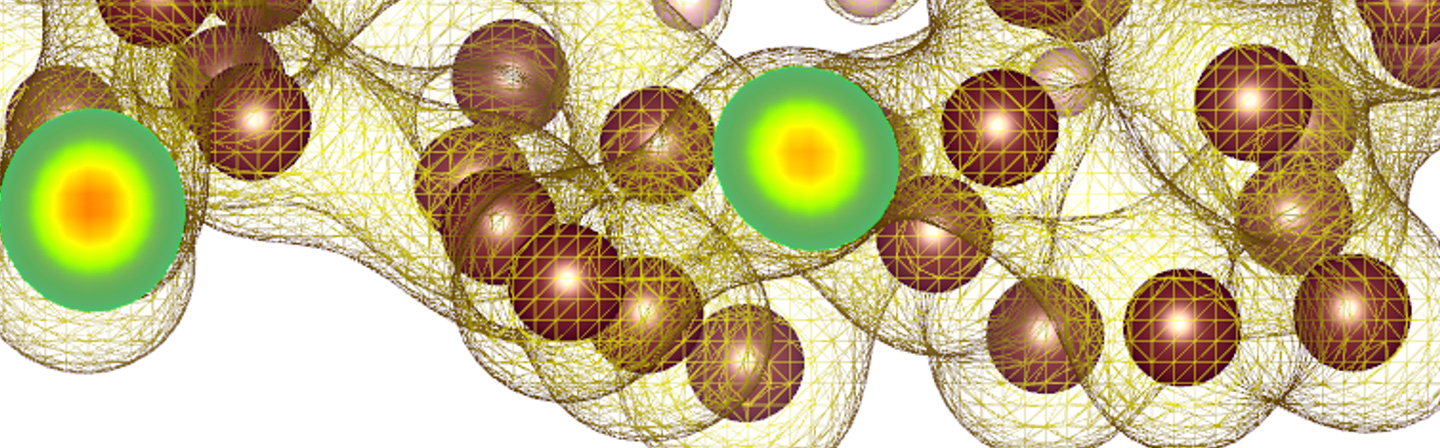
© Fraunhofer IWM
On this page:
App-based multiscale simulation tools for atomistic calculation of macroscopic materials properties
R&D services for materials modeling
Why should my company work with Fraunhofer IWM in the field of materials modeling?
How does the collaboration with Fraunhofer IWM work?
Innovative functions, customized physical properties, elimination of critical raw materials, compatibility with existing processes, independence from supply monopolies, etc.
The requirements for new materials are diverse. This makes the challenges for material design all the more complex.
This is where we come in. With our simulation calculations, we provide insights and explanations into the internal workings of materials and cause-and-effect relationships. We clarify the interrelationship between the physical properties of a material and its atomic and electronic structures. We provide an understanding of the fundamental mechanisms and relationships that enables you to develop and optimize the raw materials for your products in a targeted manner and adapt them to specific operating conditions and requirements.
Our expertise is most effective in functional materials and components that must meet high reliability and functionality requirements and have low error rates in production, as well as in development projects where trial and error loops are uneconomical and ineffective and a fundamental understanding of the problem is required.
We investigate the causes of material failure due to microstructural changes and predict the influence of additives on functional properties. This allows the manufacturing process to be designed in such a way that an optimum microstructure is created, which increases the load-bearing capacity and service life of the material.
We investigate the behavior of individual atoms in their material-specific environment and develop efficient and fast methods to find a replacement for critical elements, such as expensive raw materials or harmful additives, and to reduce the quantities used
We use data mining algorithms to examine the volumes of data generated by physically based material simulations. In the constantly growing IWM materials library, this allows us to tap into valuable correlations between crystal structures (input) and properties (output). This enables us to uncover trends and identify novel crystal structures with promising properties.
The scope of the cooperation depends on your needs and the requirements of the task.
Step 1: Input from the client - description of the task
Step 2: Define the project, e.g,
Step 3: Analytical problem diagnosis
Step 4: Reviewing the problem-solving strategy
Step 5: Implementation of the solution in the company